Introduction
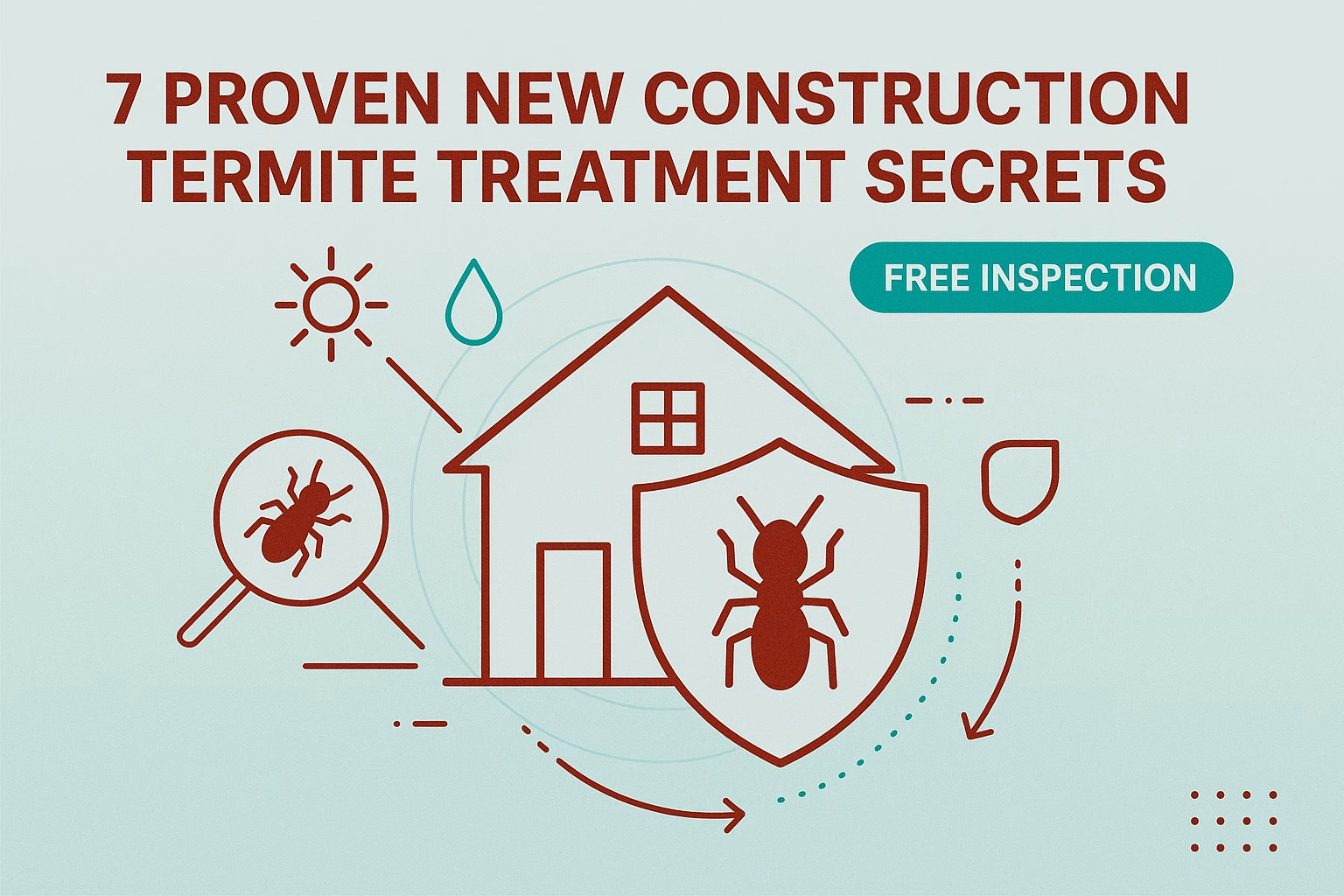
Building in the desert demands a plan that stops termites before they ever find a foothold. Here is how our new construction termite treatment shields fresh foundations and future equity from day one. Subterranean termites thrive in the Sonoran climate and love concrete slab edges, plumbing penetrations, and stem wall joints that many new builds introduce. Our approach blends code compliant pre construction termite steps, physical barriers, and moisture smart design to prevent termites long term, then backs it up with inspections and a clear warranty path for builders and buyers.
What new construction termite treatment means for Arizona home builds
The risk profile in Tucson and why pretreats matter
In Tucson and across Southern Arizona, soil conditions and irrigation patterns create perfect conditions for subterranean termites. Expansive slab construction, stem wall transitions, and drip lines close to foundations create predictable entry points. The most affordable time to protect a new home is during grading and before the slab pour when access to soil and structural joints is wide open. Proper pretreats also streamline inspections and lender clearances, keeping your build on schedule. Learn the local pressures and defenses in our region at Tucson pest threats and termite defenses.
Accepted methods and how they work together
Successful new construction termite treatment uses layered defenses that address how termites forage and enter structures. The core components include:
- Soil applied barriers around and under slabs to repel or eliminate foraging termites before they reach structural elements.
- Wood treatments at the foundation to wood interface to reinforce the most sensitive connection zones.
- Physical exclusions at penetrations and step downs that termites cannot chew or move.
For nationally recognized options and best practices, see the EPA guidance on termites and building protection.
Our layered pre construction termite plan from blueprint to slab
Blueprint review and scheduling
We start with a plan review to map every risk area. That includes plumbing and electrical penetrations, garages, porches, deep footings, control joints, and cold joints. From there we sequence the work so each layer is applied at the ideal stage.
- Builder pre pour meeting to align trench and rod work, slab pretreat coverage, and follow up inspection windows.
- Coordination with subs so access and timing are never a bottleneck.
- Label driven coverage maps that define treatment zones before work begins.
Site prep that prevents termites
Clean sites are easier to protect and inspect. Before treatment we confirm the following:
- Remove grade stakes, form boards, cellulose debris, and root balls from the footprint.
- Compact and level soils to spec and verify sub base moisture is appropriate for a uniform pretreat.
- Confirm drainage slopes away from the slab to reduce moisture that would otherwise attract termites.
- Stage bath traps and utility stubs for access before they are covered.
 Online Only Pricing!
Tucson Pest Control—Fast, Local, Guaranteed
Book in minutes. Lock in our online-only rate and get priority scheduling.
- Stops ants, spiders, mice & pack rats
- No long-term contracts
- Family & pet-friendly options
- Money-back guarantee
Online takes ~60 seconds.
No gimmicks—just your price & schedule.
Prefer to talk? We can't guarantee our online prices over the phone.
We're happy to talk! Call us at (520) 476-0879
Soil barrier fundamentals for slab and foundation elements
Trench and rod for a continuous treated zone
The perimeter barrier is only as good as its continuity. We create a continuous vertical treated zone along the slab and stem wall perimeter, treating both sides of foundation elements and all points where porches, patios, and piers meet structural concrete. Application depth is adjusted for deep footings, and we maintain safe distances from drains and sumps.
Process details mirror state level guidance like pre construction subterranean trench and rod barriers.
Slab pretreat before the pour
Before concrete is placed, we evenly apply labeled volumes over compacted soil under the slab and at all critical areas. Focus points include:
- Bath traps and utility stubs where termites often exploit gaps.
- Garages and porches that connect to the main slab or introduce step downs.
- Control joints and cold joints where expansion and cracking can open concealed termite highways.
This blanket pretreat establishes a horizontal barrier that complements the perimeter work to prevent termites from colonizing beneath the structure.
Wood and joint protection that prevent termites after the pour
Borate focus at the foundation to wood interface
After framing begins, borate wood treatments lock in another layer of defense at the most termite sensitive connection. We treat sill plates, bottom plates, and rim areas where wood meets masonry, then extend protection to bath trap framing, garages, and kneewalls that sit close to grade. This step reinforces the pretreat and protects against future moisture changes or soil movement that could reduce soil barrier effectiveness.
Sealing and detailing that closes silent shortcuts
Sealing small gaps removes easy paths termites use to reach wood. We seal around plumbing and HVAC penetrations, meter boxes, and weep screeds to deter hidden entry. We also add early monitoring points at slab edges so any activity is detected quickly as landscaping and irrigation go in. See our homeowner guide for inspection points and maintenance tips at Residential pest control Tucson guide.
Physical barriers and design details that strengthen new construction termite treatment
Penetration guards and perimeter upgrades
Physical barriers provide durable protection that does not rely solely on chemistry. We use stainless steel mesh sleeves and sized particle sand around slab penetrations to create non chemical exclusions that termites cannot chew or move. These are ideal for bath groups, kitchens, mechanical chases, and other high traffic utility points that may be disturbed during future remodels.
Foundation edge and step downs
Elevation changes are frequent failure points. We install barriers and compatible sealers at porch step downs and slab transitions where cracking is likely. We also maintain a visible inspection gap between stucco and soil to prevent termites and allow easy monitoring during future service visits.
Moisture management and landscaping choices that prevent termites
Grading irrigation and material choices
Moisture drives termite foraging. Good site design lowers risk for the life of the home:
- Maintain proper fall away from the foundation for at least the first several feet.
- Relocate irrigation emitters out from the slab perimeter and avoid overspray that wets stucco or stem walls.
- Keep mulch and bark several inches off the stem wall and use rock in close zones to reduce cellulose and moisture against the house.
- Choose planters and edging that do not trap water at the foundation line.
Online Only Pricing!
Tucson Pest Control—Fast, Local, Guaranteed
Book in minutes. Lock in our online-only rate and get priority scheduling.
- Stops ants, spiders, mice & pack rats
- No long-term contracts
- Family & pet-friendly options
- Money-back guarantee
Online takes ~60 seconds.
No gimmicks—just your price & schedule.
Prefer to talk? We can't guarantee our online prices over the phone.
We're happy to talk! Call us at (520) 476-0879
Utility drainage and aeration
Protect weep screeds and dryer vents with breathable gaps and screens so moisture can escape without creating termite friendly cover. Make sure downspouts and French drains discharge well away from the slab and that splash blocks do not settle against stucco.
Documentation inspections and compliance for new builds
Pretreat records and lender requirements
Builders and buyers get complete documentation so closings stay on track. We provide maps showing treated zones, product labels, and application volumes. Where required, we also supply a certificate of compliance and warranty details for the title package. Understand regional rules for high risk areas and agency expectations using Arizona homeowner termite guidance.
Post pour quality checks
After the slab cures and before insulation and drywall, we perform a quality check:
- Inspect slab edges, control joints, and cold joints for cracks or gaps that need sealing.
- Verify all penetrations received sealing or physical barriers as specified.
- Photograph critical areas and confirm cleanup of wood scraps and form boards that would feed termites.
- Update the job record so warranty coverage is clear and transferable.
Budget and warranty for new construction termite treatment
How we estimate pretreat scope
We size the project based on measurable elements so pricing is transparent and predictable:
- Linear footage of slab perimeter and interior foundation elements.
- Number of penetrations including bath groups, utility stubs, and sleeves.
- Porches patios and step downs that require additional trench and rod work.
- Deep footings and piers that change application depth and volume.
Transparent pricing helps builders and buyers plan the pretreat plus follow up monitoring. Get benchmarks at our Tucson pest control pricing guide.
Warranty and monitoring cadence
We pair the pretreat with a clear, transferable warranty and a schedule of inspections during the first years of occupancy. If irrigation or wood features expand near the home, we can add bait based monitoring around landscaping to catch activity early. Warranty service includes re inspection after major grading or hardscape changes to keep protection intact.
How we phase new construction termite treatment during the build
Phase one before footings
- Site cleanup and layout review to remove cellulose and debris.
- Barrier planning for perimeter, interior footings, and penetrations.
- Soil pretreat scheduling aligned with excavation and form setting.
Phase two before slab pour
- Apply slab pretreat and confirm uniform coverage on compacted soil.
- Treat penetrations, bath traps, and high risk utility locations.
- Verify coverage across control joints, cold joints, garages, and porches.
Phase three after framing and exterior finishes
- Wood interface treatments at sill plates and other foundation to wood contact points.
- Sealing and physical barrier checks at penetrations and step downs.
- Final documentation, photos, and warranty issuance for closing.
Conclusion
New construction termite treatment works best as a layered system that starts at grading, fortifies the slab and wood interface, manages moisture, and leaves a clear inspection path for the future. Ready to protect your new build. Book an expert blueprint review and pretreat date at our online scheduler at Book Online.