Introduction
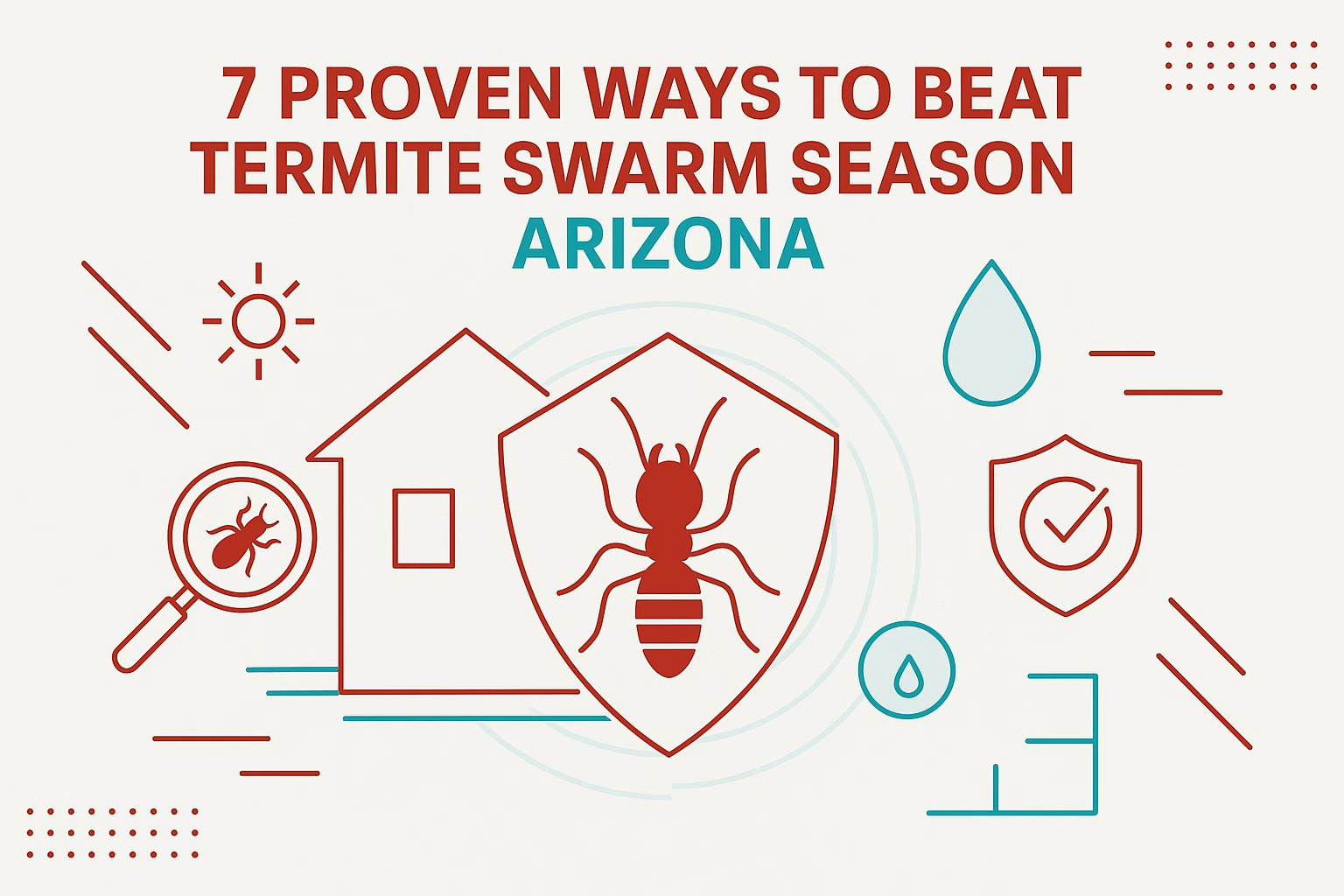
Tucson homeowners often spot delicate wings on windowsills or suddenly see clouds of flying insects after a warm rain and wonder what this means for termite swarm season Arizona. Those sightings matter. Swarmers are not random bugs. They are the reproductive stage of termites and their appearance can signal a mature colony nearby that is ready to expand.
The good news is that quick action can protect your investment. By learning what is a termite swarm, recognizing the most important signs of termites, and following a Tucson specific plan for inspection, prevention, and treatment, you can stay ahead of damage and costs.
What is a termite swarm and why Tucson sees them
What is a termite swarm
A termite swarm is a short lived flight event when winged termites called alates leave their original colony to start new ones. It is the way termites reproduce and spread. When conditions are right, hundreds or thousands of alates emerge, fly toward light, shed their wings, and pair off to begin a new colony in soil or wood.
Homeowners often confuse swarmers with flying ants. A few quick visual checks help you tell the difference:
- Waist: Termites have a straight waist while flying ants have a pinched waist.
- Antennae: Termites have straight beadlike antennae while ants have elbowed antennae.
- Wings: Termites have two pairs of wings of equal length that are longer than the body. Flying ants have wings of unequal length.
If you see what looks like termite swarmers, your first steps should be simple and calm. Collect a few specimens, do not spray, and document where and when you saw them. For a clear identification refresher, review the EPA guidance on identifying and controlling termites.
Tucson termite types that swarm
Arid land subterranean termites are the primary structural threat across the Tucson metro. These termites live in soil and build protective mud tubes to reach wood. Their colonies thrive around irrigated landscaping, leaky hose bibs, and along slab foundations where moisture persists. Common entry points include slab cracks, foundation cold joints, and gaps around utility lines.
Drywood termites are less moisture dependent. They nest entirely within dry wood and can infest attic voids, exposed rafters, baseboards, and even furniture. One telltale sign is the presence of dry, pellet shaped droppings called frass that look like tiny piles of pepper or sand near kickout holes. Older stucco homes in central Tucson with wood accents are frequent targets. For details on drywood behavior and control, see the University of Arizona drywood termite guide.
When is termite swarm season Arizona in Tucson
Local timing by elevation and weather
In greater Tucson, the most common swarming window runs from late winter into early spring. Many homeowners notice a bump in activity around March when daytime warmth and just enough humidity arrive after winter rains. Swarming often follows a warm spell after precipitation.
 Online Only Pricing!
Tucson Pest Control—Fast, Local, Guaranteed
Book in minutes. Lock in our online-only rate and get priority scheduling.
- Stops ants, spiders, mice & pack rats
- No long-term contracts
- Family & pet-friendly options
- Money-back guarantee
Online takes ~60 seconds.
No gimmicks—just your price & schedule.
Prefer to talk? We can't guarantee our online prices over the phone.
We're happy to talk! Call us at (520) 476-0879
In some neighborhoods there is a secondary surge during monsoon season. Consistent moisture in the soil, shaded foundations, and wood to ground contact can extend conducive conditions and lead to additional swarms or fresh foraging. Elevation and microclimate matter too. Lower desert pockets warm earlier and may see swarmers sooner than foothill areas.
Homeowner calendar for termite swarm season Arizona
Use this simple calendar to stay ahead of activity.
Before the window
- Remove cellulose debris such as scrap lumber, buried form boards, and tree stumps.
- Correct irrigation overspray that wets the foundation and reduce run time for drip lines that sit close to the stem wall.
- Schedule a pre swarm inspection using the local seasonal pest calendar to time your visit.
During the window
- Limit porch and landscape lighting at night to reduce attraction.
- Save a few swarmers or shed wings in a labeled bag or vial for species identification.
- Document dates, weather, and the exact locations where you saw activity.
After sightings
- Request a professional inspection and map hotspots along expansion joints, plumbing penetrations, porch posts, and slab cracks.
- Address moisture sources such as leaks or overwatered beds.
Signs of termites Tucson homeowners should not ignore during termite swarm season Arizona
Visual cues you can spot fast
- Discarded wings on windowsills, at door thresholds, and around lights.
- Mud tubes about the width of a pencil on stem walls, along garage edges, and over interior foundation seams.
- Drywood frass that looks like pepper or tiny wood colored pellets near baseboards, window frames, or beneath attic rafters.
For photos and step by step verification, use this Tucson centered resource: Tucson homeowner termite checklist.
Subtle clues inside the structure
- Blistered or rippled paint that hides galleries beneath.
- Soft or hollow sounding wood when you tap baseboards, door casings, or window sills.
- Moisture staining near bathrooms, kitchens, and laundry areas that attracts subterranean termites.
A clean foundation line helps you catch problems early. Maintain a clear six inch inspection gap between soil and stucco so that any new mud tubes are easy to spot.
First 24 hours after you see swarmers in termite swarm season Arizona
Smart triage and documentation
- Do not spray the area. Over the counter products can scatter termites and complicate treatment mapping.
- Collect evidence. Place a few swarmers or wings in a clear bag or small jar. Take close photos of wings, antennae, and body shape.
- Record context. Note the time of day, weather, indoor or outdoor location, and the room or facade where you found them.
- Review your options. Read the Arizona homeowner termite control options so you can discuss a plan with a licensed professional.
When and how to call a Tucson pro
A thorough inspection in Tucson should include:
- Complete exterior foundation pass including slab edges, porch posts, expansion joints, and visible cracks.
- Interior baseboards, window sills, door casings, and plumbing access points in kitchens, baths, and laundry rooms.
- Garage stem walls and slab seams where tubes commonly appear.
- Attic or crawl checks where accessible, with attention to drywood evidence.
- A written graph of findings that marks activity, conditions, and recommended treatment zones.
Online Only Pricing!
Tucson Pest Control—Fast, Local, Guaranteed
Book in minutes. Lock in our online-only rate and get priority scheduling.
- Stops ants, spiders, mice & pack rats
- No long-term contracts
- Family & pet-friendly options
- Money-back guarantee
Online takes ~60 seconds.
No gimmicks—just your price & schedule.
Prefer to talk? We can't guarantee our online prices over the phone.
We're happy to talk! Call us at (520) 476-0879
Ask better questions and compare apples to apples with the Tucson pest control hiring checklist. Ready to move quickly during swarm season
Book a priority inspection so you get scheduled before the next warm up.
Treatment and prevention options suited to termite swarm season Arizona
Subterranean termite solutions that fit Tucson construction
- Soil trench and rod applications along the perimeter and at cold joints to create a continuous treated zone around your slab. This intercepts foraging termites before they reach the structure.
- Pinpoint foaming or injections into wall voids and directly into active galleries where evidence is present, especially near plumbing penetrations and expansion joints.
- Bait monitoring systems placed around the structure where conventional soil treatments are limited by wells, additions, or complex hardscapes.
Intact soil barriers matter. Patio additions, landscape borders, or past utility work can disrupt the original treatment zone and open hidden entry points. A skilled technician will identify those breaks and restore protection.
Drywood termite considerations
- Localized wood treatments such as drilling and injecting directly into infested members when access and scope are limited.
- Whole structure options evaluated when multiple areas are active or access is poor. The decision depends on infestation extent, construction type, and homeowner goals.
- Ongoing monitoring with follow up inspections to confirm success and prevent reinfestation.
Habitat fixes that make your home less attractive in termite swarm season Arizona
Moisture and material corrections
- Reposition drip emitters away from the foundation and adjust timers to avoid constant wet soil near the stem wall.
- Repair leaks at hose bibs, irrigation lines, and air conditioner condensate drains.
- Store firewood and lumber off the ground and several feet from exterior walls.
- Replace cellulose mulch against the foundation with rock where practical.
Building details that reduce risk
- Maintain a visible inspection gap between soil and stucco to expose any new mud tubes quickly.
- Seal utility penetrations with appropriate materials to block concealed entry paths.
- Install downspout extensions that carry water well beyond the slab edge.
Myths and mistakes to avoid during termite swarm season Arizona
Misconceptions that cost homeowners money
- Thinking swarmers only came from the yard so the house is safe. Swarmers indoors often indicate a colony inside or immediately adjacent.
- Assuming a single spray solves the problem. Subterranean colonies live in connected soil networks that require targeted, comprehensive treatment zones.
- Waiting until the swarm window passes. Delays allow colonies to expand unseen and increase repair costs.
Practical choices that pay off
- Schedule annual inspections timed to the local season and after heavy rain events.
- Keep organized documentation of all sightings, photos, and past treatments to guide future service plans.
Conclusion
The key to winning during termite swarm season Arizona is speed and clarity. Recognize what is a termite swarm, confirm the critical signs of termites fast, and act within Tucson’s unique weather windows. Combine inspection, moisture control, and targeted professional treatments for reliable protection.
Ready to protect your home before the next wave arrives during termite swarm season Arizona You can book a priority inspection today.